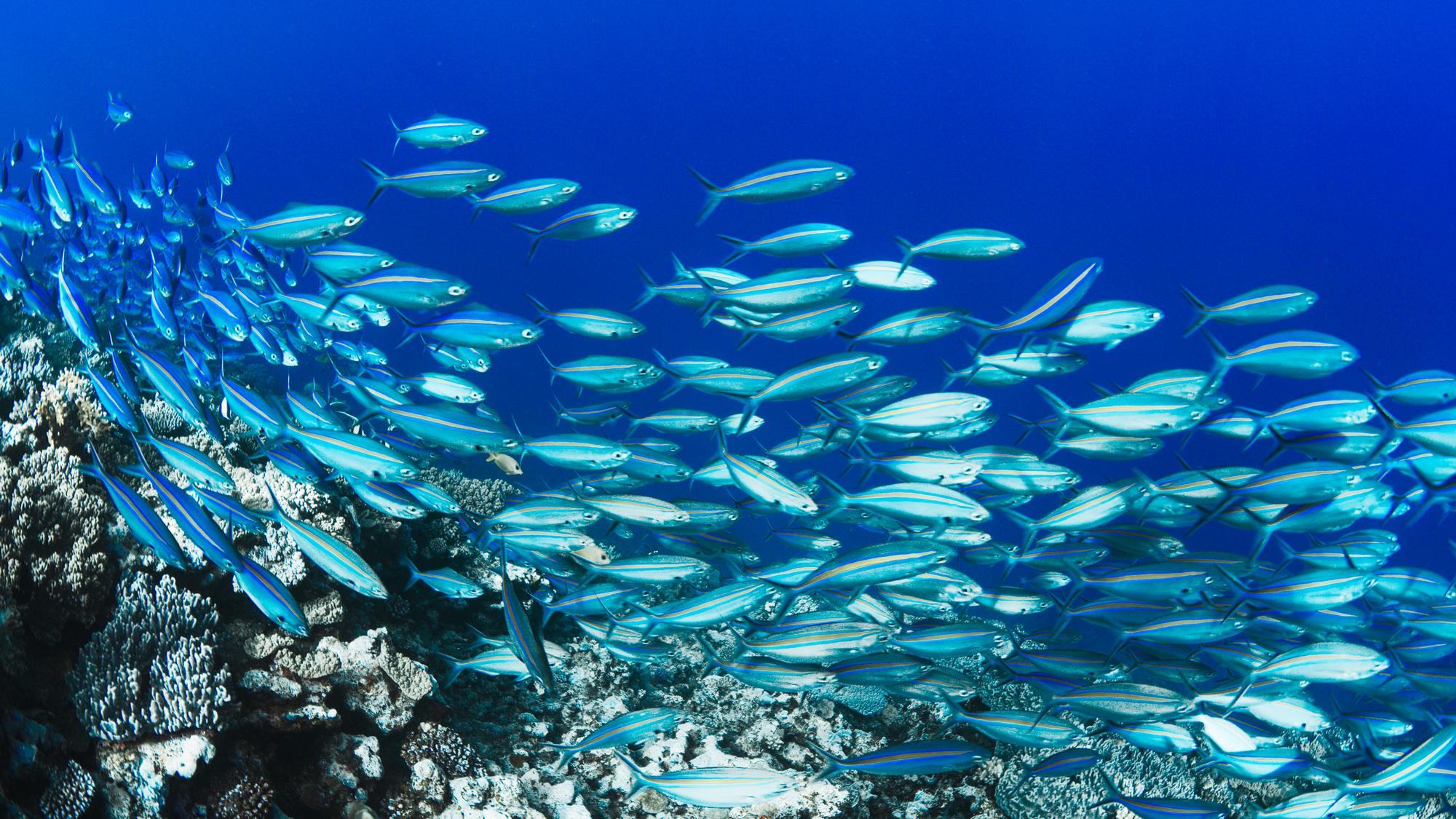
Home to 30% of the world’s last pristine reefs, the largest lagoon in the world, and the second-largest barrier reef system after the Great Barrier Reef, with six areas recognized as UNESCO World Heritage sites.
New Caledonia’s ocean ecosystems are among the most diverse in the world, supporting unique marine species, coastal communities and local livelihoods. Conservation International works with partners across science, conservation and fisheries to protect marine biodiversity, strengthen sustainable ocean management and develop solutions that support both healthy ecosystems and resilient communities.
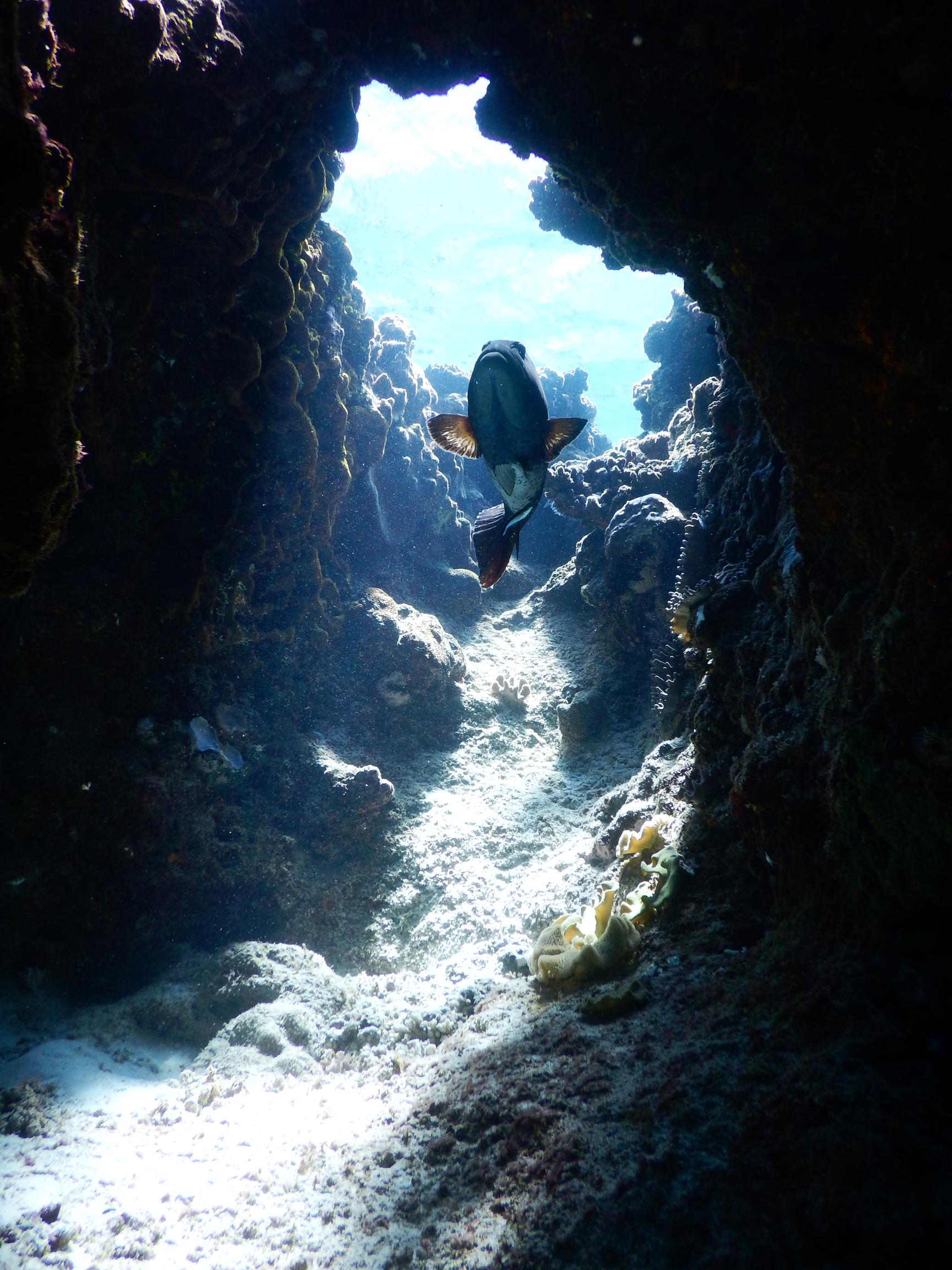
Coral Sea Natural Park - Nèkwiè pûû mör̂u (ocean, origine of life)
(Parc naturel de la mer de Corail)
Conservation International helped New Caledonia establish the Coral Sea Natural Park, also known as the Parc Naturel de la Mer de Corail (PNMC) in 2014, a 1.3 million-square-kilometre multiple use marine protected area with 12% fully protected and one of the largest in the world encompassing New Caledonia’s entire Exclusive Economic Zone.
Home to some of the highest fish biomass and coral coverage in the world, the Park’s includes remote islands, complex reef systems, and around 150 seamounts, and deep-sea basins and trenches.
The Park is a haven for an extraordinary diversity of marine life, with over 9,300 marine species in total including 500 coral species, 1,700 fish species, plus whales, sharks, and manta rays.
Conservation International works with the Government of New Caledonia, Kanak communities and regional partners to strengthen the park’s management through scientific research, marine spatial planning and the integration of Indigenous knowledge with support from the Blue Nature Alliance. This includes supporting improved understanding of marine ecosystems, identifying areas of importance for conservation and advancing approaches that balance biodiversity protection with sustainable use of ocean resources.
Coastal fisheries
In 2018 Conservation International co-developed a new sustainable coastal fisheries certification in New Caledonia, working in close partnership with the Chamber of Agriculture and the coastal fisheries Union.
As part of this , Conservation International helped design the first-ever “Pêche Responsable” framework, including certification standards, assessment tools, fisher self-evaluation guides, and scoring systems to promote sustainable fishing practices, traceability, product quality, environmental stewardship, and safety at sea.
This historic initiative led to the official recognition of the “Pêche Responsable” certification in 2019—the first certification scheme of its kind in the territory. More than a decade later, the certification continues to expand across New Caledonia, supporting fishing communities, strengthening sustainable fisheries management, and creating local harvested seafood market value.
Improving tuna fisheries
Conservation International is working with government, industry and civil society partners to strengthen the sustainability and social responsibility of New Caledonia’s tuna fisheries.
Through workshops on labour standards, human rights, sustainable fisheries management and certification pathways, the initiative helps local fisheries improve environmental performance, enhance worker protections and access premium seafood markets.
As part of the Pacific Tuna Jurisdictional Initiative, this collaborative work supports a more resilient tuna industry that benefits people, nature and the blue economy while contributing to more sustainable global seafood supply chains.
February 18, 2023: Conservation International and tuna industry collaborate to strengthen the performance of longline tuna fisheries in Fiji and in New Caledonia
February 18, 2026: Pacific tuna fisheries to see boost in protection & production from expanded $3.3 million grant
Fish Leather Production
Conservation International is supporting innovative, community-led solutions that reduce waste, strengthen local livelihoods and promote sustainable seafood in New Caledonia. Through fish leather workshops, discarded fish skins are transformed into high-value products, creating new economic opportunities while demonstrating the potential of a circular economy. Bringing together fishers, Indigenous communities, artisans and local businesses, the initiative highlights how collaboration and creativity can help add value to waste, support sustainable fisheries and build more resilient island communities.