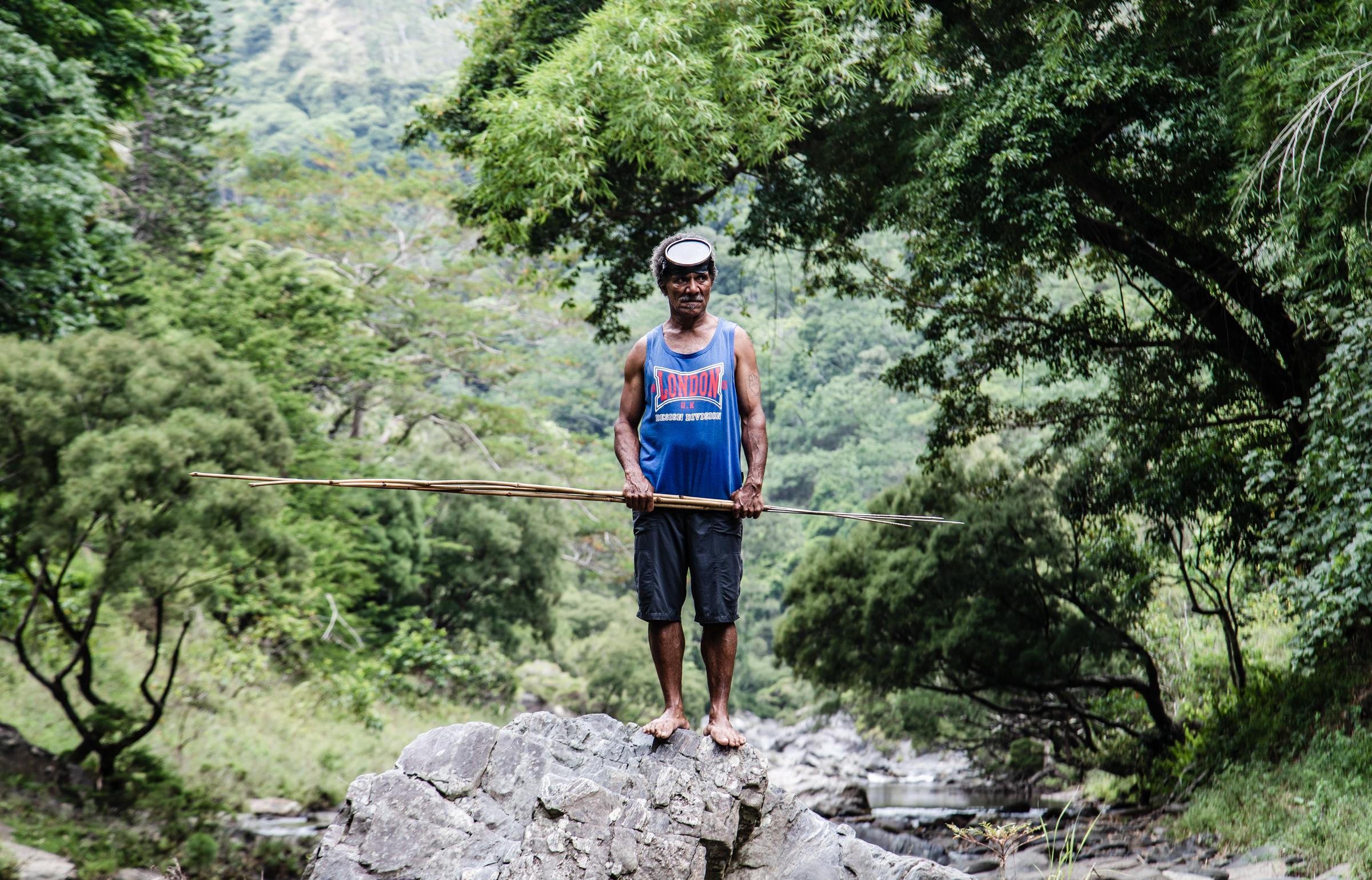
Globally, Indigenous peoples steward more than a quarter of the Earth’s land, safeguarding much of its biodiversity and playing a vital role in protecting nature.
Conservation International recognizes that lasting conservation solutions are strongest when Indigenous knowledge, cultural practices, governance systems and worldviews are valued alongside modern science. By bringing these knowledge systems together, we support holistic, place-based approaches that reflect the values, aspirations and lived experiences of the communities who have cared for these places for generations.
In New Caledonia, we work alongside the Indigenous Kanak people to support the recognition and inclusion of Kanak knowledge systems and customary governance in conservation planning, scientific research and nature-based solutions. Through partnerships with the Customary Senate of New Caledonia and the 8 Kanak Customary Councils, and with support from the Blue Nature Alliance, we help strengthen Indigenous participation in environmental decision-making, governance and long-term ocean stewardship.
Kanak representation and leadership in ocean conservation
For Kanak communities, the ocean is a source of identity, wellbeing and cultural connection. Marine species such as sharks, turtles and whales, as well as deep-sea environments and underwater landscapes, hold deep cultural and spiritual significance. For generations, customary governance systems have guided relationships with the ocean, using practices such as protected areas and seasonal restrictions to maintain healthy marine ecosystems and sustain communities.
We partner with Kanak customary authorities, including the Customary Senate of New Caledonia and the eight customary areas, alongside others, to strengthen the integration and representation of Indigenous leadership within the NCPS Consultative Committee. This leads to strengthening customary authorities to engage in the management of the Natural Park of the Coral Sea and promote more inclusive approaches to conservation.
Our goal is to connect traditional knowledge, customary governance, conservation science, community partnerships, and policy engagement to foster more inclusive, effective, and culturally grounded ocean stewardship.
The Kanak Vision of the Ocean
For generations, the Kanak people of New Caledonia have maintained a deep relationship with the ocean, guided by knowledge, values and customary practices that connect people to the sea, the land and the sky. Recognizing the ocean as a living source of identity, culture, wellbeing and sustenance, Kanak communities hold important knowledge and perspectives to help shape a more sustainable future.
Conservation International was a founding partner in the development of the Kanak Vision of the Ocean, a Kanak-led vision that expresses this relationship and shares Kanak values, knowledge and aspirations for the future of the ocean. This promotes the protection of marine and seabed ecosystems, strengthens Kanak participation in ocean governance and decision-making, captures Kanak traditional knowledge and fosters dialogue across knowledge systems, and supports the continued transmission of traditional knowledge and values to future generations. It also aims to document, promote, and preserve the Kanak marine cultural heritage, including ancestor species, traditional place names, sacred sites, founding narratives, and the relationships of stewardship that bind clans, territories, and the marine environment.
A legacy of supporting Indigenous-led protection of Mont Panié
Conservation International has a long history of supporting the protection and co-management of Mont Panié Wilderness Reserve, a sacred landscape for the Indigenous Kanak people and home to the critically endangered Dayu Biik (Kauri tree). Through past partnerships with Kanak communities and local organisations, we supported conservation efforts and the vision to double the protected area, helping safeguard ancestral lands, cultural heritage and one of New Caledonia’s most important ecosystems for future generations.