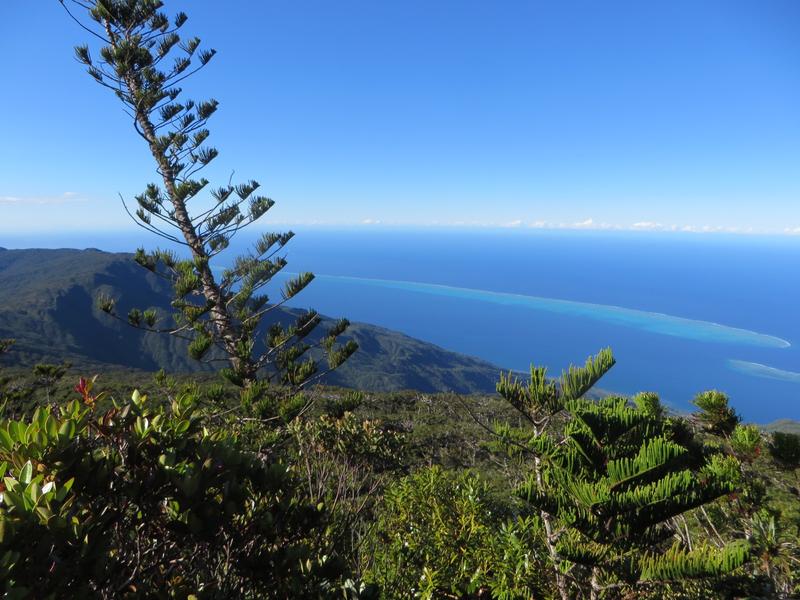
The health of the mountain ecosystems directly connects to downstream forests, rivers, mangroves and coral reefs.
Across New Caledonia, Conservation International works with Kanak communities, government and local partners to restore landscapes from the mountains to the sea, using nature-based solutions that reduce erosion, protect biodiversity and strengthen resilience to climate change. By combining Indigenous knowledge with ecological science, Conservation International is helping safeguard the ecosystems that support people, wildlife and coastal communities.
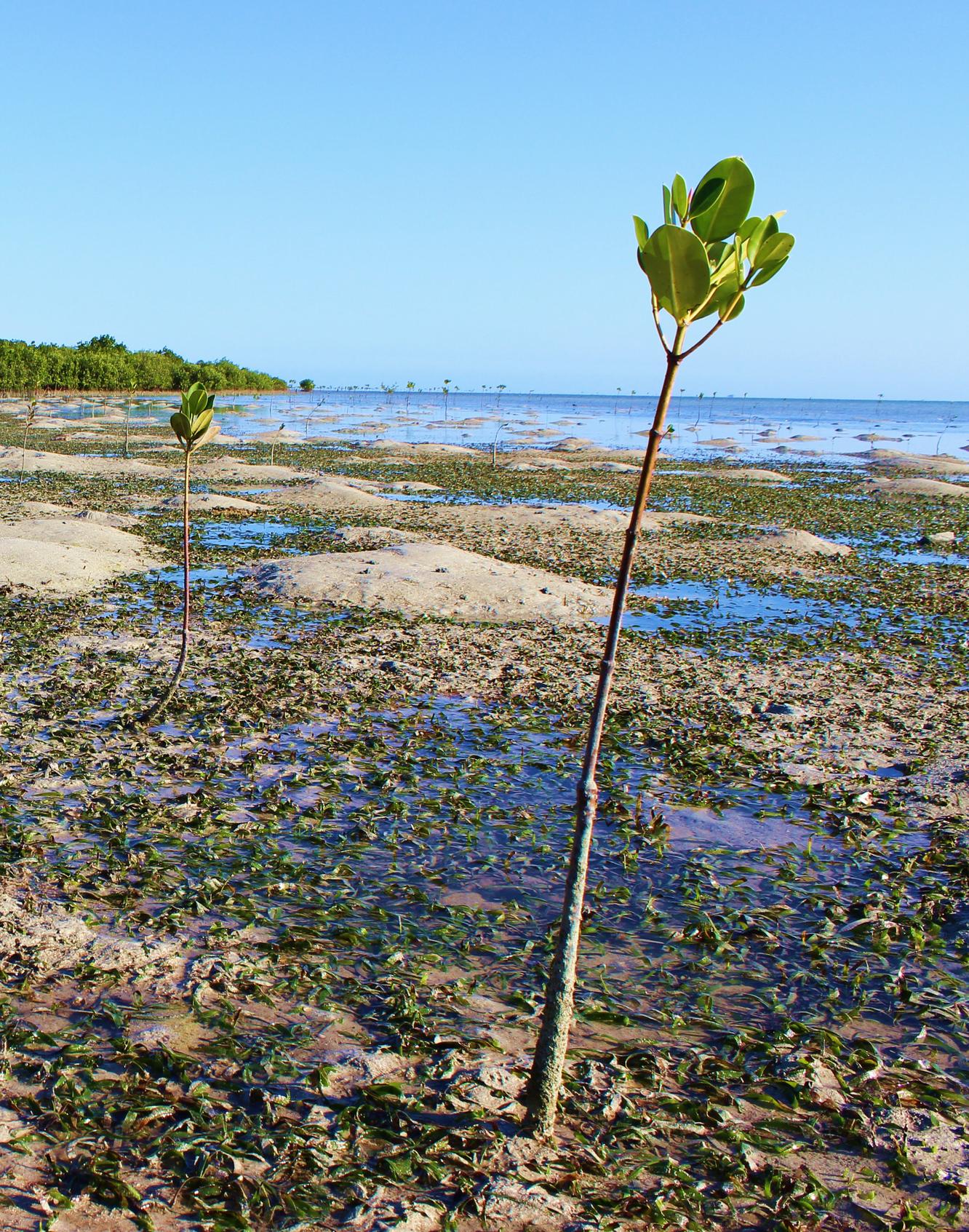
Sediment Traps: Protecting Reefs from terrigenous input
Sediment from mountain run-off, bushfires and abandoned mining sites can smother coral reefs and damage coastal ecosystems. In New Caledonia's Southern Province, Conservation International is piloting biodegradable bamboo permeable fences that slow erosion, capture sediment before it reaches the ocean and create conditions for mangrove recovery.
The 500-metre pilot project spans two hectares and brings together government agencies, civil society organisations and local youth to build skills and restore degraded coastlines. As part of a broader ridge-to-reef approach, the project supports healthier reefs, increased carbon storage and a scalable model for nature-based restoration.
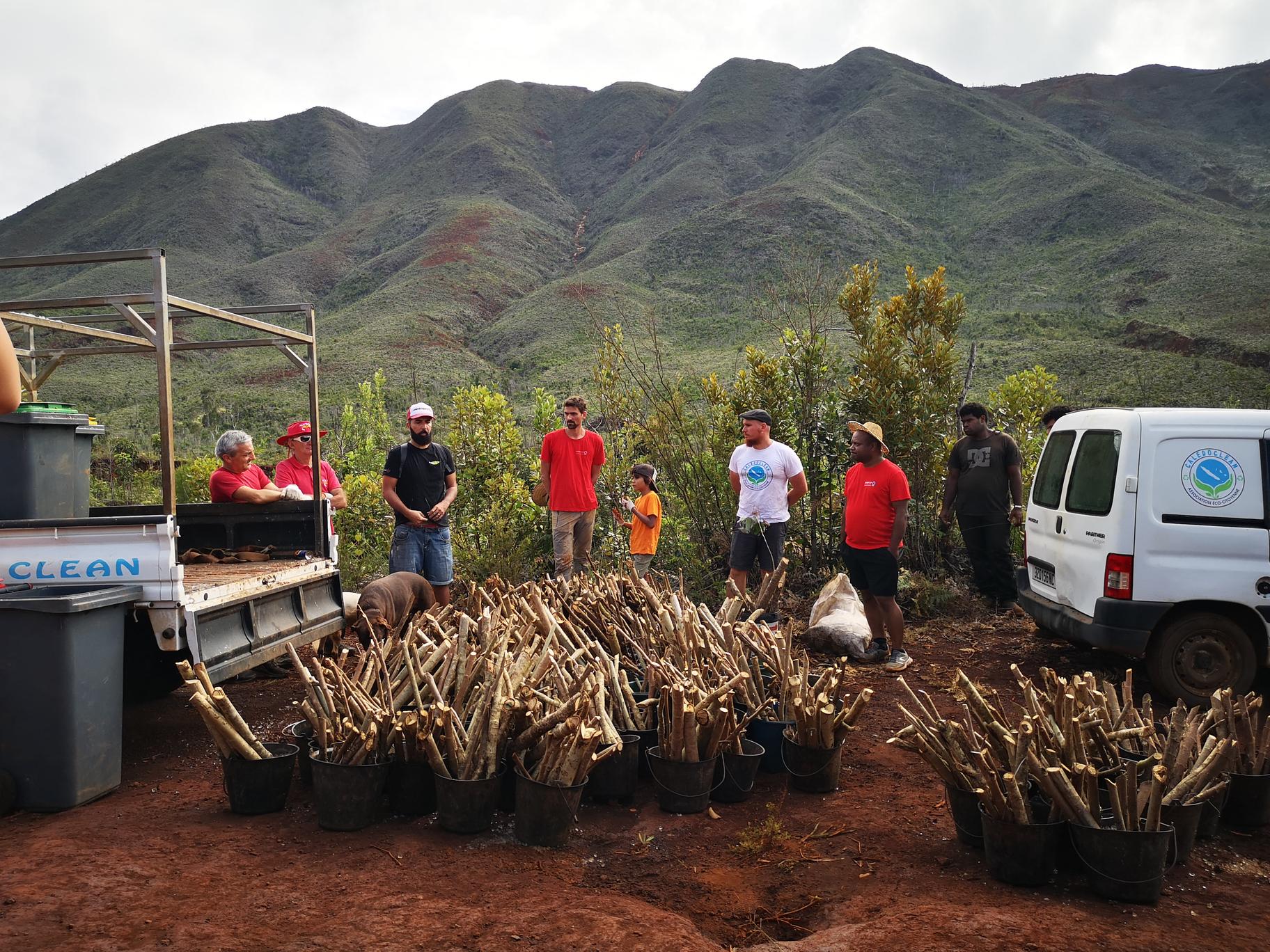
Green Firebreaks: Fighting Fires with Traditional Knowledge
New Caledonia’s forests are home to one of the highest concentrations of endemic plant species on Earth, but these unique ecosystems are increasingly threatened by hotter, drier conditions and more frequent bushfires. Conservation International is working with Kanak communities and knowledge holders to develop nature-based solutions that reduce fire risk while supporting forest recovery and biodiversity.
At the centre of this work is the Bourao tree (Hibiscus tiliaceus), a native species with deep cultural significance for Kanak communities. Known for its large, moisture-retaining leaves and ability to support healthy soils, Bourao is being planted strategically to create green firebreaks—living barriers that help slow the spread of wildfires while protecting surrounding forests.
Unlike conventional firebreaks that rely on clearing vegetation, green firebreaks work with nature by restoring native plants and strengthening ecosystem resilience. Beyond reducing fire impacts, Bourao plantings help prevent erosion, support natural regeneration and provide culturally important resources, including fibres traditionally used for rope-weaving. This approach shows how Indigenous knowledge and ecological science can come together to create practical solutions for a changing climate.